Introduction
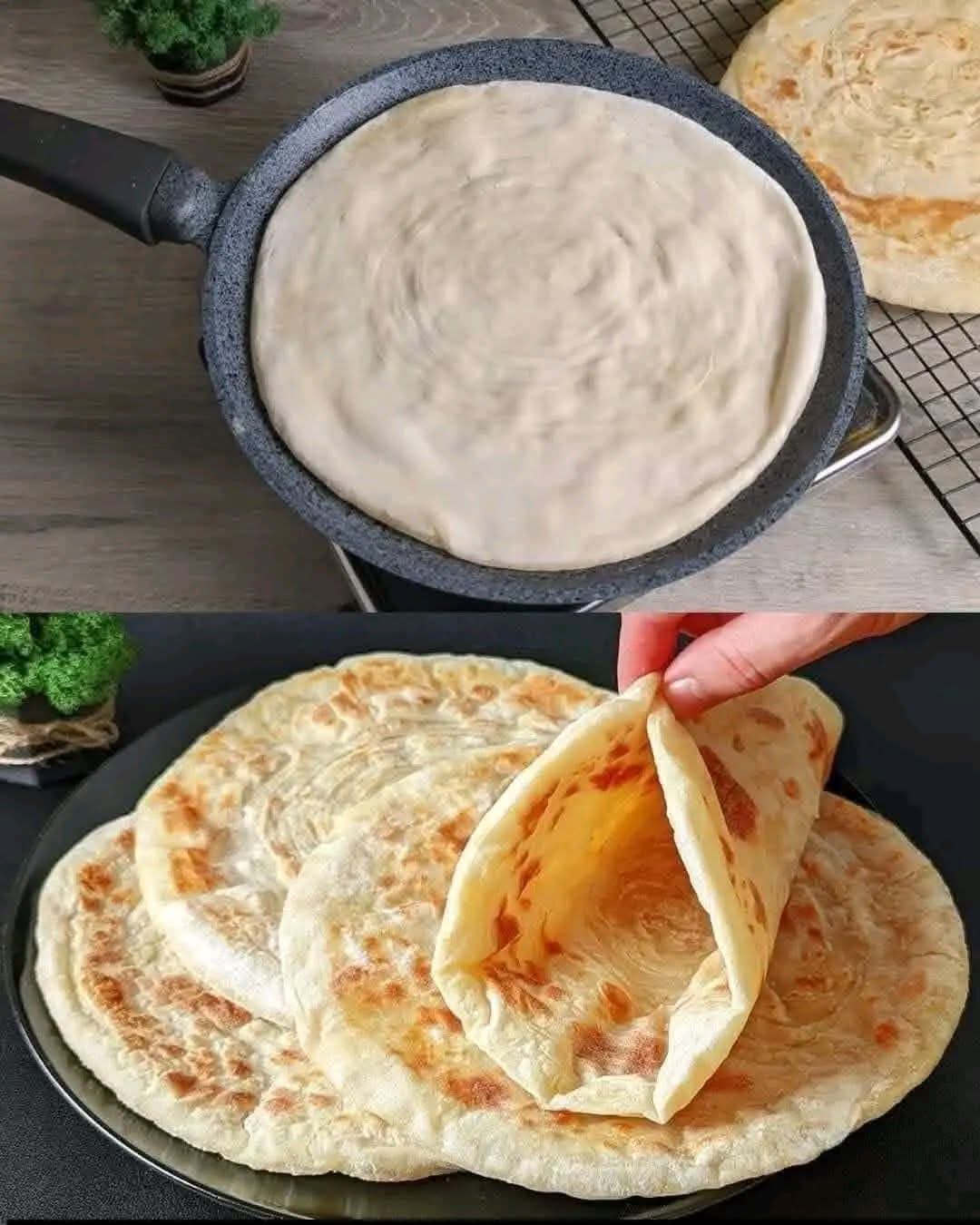
This homemade flatbread is soft, tender, lightly golden, and beautifully layered. The picture shows thin, round breads cooked in a skillet until they develop delicious golden-brown spots while remaining soft enough to fold.
They are perfect for breakfast, lunch, or dinner and can be served with cheese, eggs, honey, butter, vegetables, grilled meat, or your favorite dips.
The secret is a soft dough, enough resting time, gentle rolling, and cooking over medium heat. You don’t need an oven—just a good skillet or griddle.
🛒 Ingredients
For the dough
- 500 g all-purpose flour
- 1 teaspoon salt
- 1 teaspoon sugar
- 2 tablespoons vegetable oil
- 300–330 ml warm water, added gradually
- 2 tablespoons plain yogurt, optional
For layering
- 3 tablespoons melted butter
- 3 tablespoons vegetable oil
- A little flour for dusting
For cooking
- A small amount of oil or butter
👨🍳 Step 1: Make the Dough
Add the flour to a large bowl.
Add the salt and sugar.
Mix everything together.
Make a well in the center and add the vegetable oil.
Begin adding the warm water little by little while mixing with your hand.
Don’t add all the water at once because different types of flour absorb different amounts of water.
Continue mixing until you have a soft dough.
If the dough feels dry, add a little more water.
If it feels extremely sticky, add a small amount of flour.
The goal is a soft, smooth, and flexible dough.
✋ Step 2: Knead the Dough
Transfer the dough to a lightly floured work surface.
Knead for approximately 8–10 minutes.
Push the dough forward with the palm of your hand, fold it back, and repeat.
As you knead, the dough should become smoother and more elastic.
This step is important because good gluten development helps the flatbread remain flexible instead of breaking when you stretch it.
⏰ Step 3: Let the Dough Rest
Place the dough into a lightly oiled bowl.
Cover it with plastic wrap, a plate, or a clean kitchen towel.
Let it rest for approximately 30–45 minutes.
This resting period allows the dough to relax.
A relaxed dough is much easier to stretch and roll.
⚪ Step 4: Divide the Dough
After resting, lightly oil your hands.
Divide the dough into approximately 8 equal pieces.
Roll each piece into a smooth ball.
Place the dough balls on a lightly oiled plate or tray.
Cover them again.
Let them rest for another 10–15 minutes.
This second rest makes stretching much easier.
🧈 Step 5: Prepare the Butter Mixture
In a small bowl, combine:
- Melted butter
- Vegetable oil
Mix well.
This mixture will help create the soft, flaky layers visible in the finished flatbread.
🫓 Step 6: Stretch the First Dough Ball
Take one dough ball.
Place it on a lightly oiled work surface.
Using your fingertips, gently press it outward.
Continue stretching until it becomes very thin.
You don’t need to make it perfectly round.
Try to make the center and edges relatively thin without tearing the dough.
✨ Step 7: Create the Layers
Brush a thin layer of the butter-and-oil mixture over the stretched dough.
Lightly sprinkle with flour.
Fold the dough from one side toward the center.
Then fold the opposite side over it.
Continue folding until you create a compact layered piece.
Alternatively, you can gently roll the thin dough into a loose spiral.
The goal is to create multiple thin layers.
⏰ Step 8: Rest Again
Place the folded dough pieces on a lightly oiled plate.
Cover them.
Let them rest for another 10 minutes.
This prevents the dough from becoming difficult to stretch.
🫓 Step 9: Flatten the Bread
Take one folded piece.
Gently flatten it with your fingers.
Stretch or roll it into a round approximately 15–20 cm wide, depending on how thick you want the bread.
Don’t press too aggressively.
You want to preserve the layers you created.
Repeat with the remaining dough.
🔥 Step 10: Heat the Pan
Place a heavy skillet or non-stick frying pan over medium heat.
Allow it to become properly hot.
Add a very small amount of oil.
You don’t want the pan swimming in oil.
A light coating is enough.
🫓 Step 11: Cook the Flatbread
Place one flattened dough round into the hot pan.
Cook for approximately 1–2 minutes.
You should begin seeing small bubbles forming.
When the bottom develops golden-brown spots, flip the bread.
Cook the other side for another 1–2 minutes.
If necessary, brush a tiny amount of butter or oil onto the surface.
Don’t cook over extremely high heat because the outside can burn before the inside cooks properly.
🔄 Step 12: Flip and Finish
Continue flipping the bread every 30–60 seconds if necessary.
You want:
- Golden-brown spots
- A cooked interior
- Soft layers
- A flexible texture
When finished, remove the bread from the pan.
Immediately place it under a clean kitchen towel.
The trapped steam helps keep it soft.
🧺 Step 13: Repeat
Continue cooking the remaining flatbreads one at a time.
As each one finishes, stack it under the towel.
The warmth and steam will help keep the entire stack soft.
🧈 Optional Butter Finish
For an extra-rich version, brush each hot flatbread lightly with butter immediately after cooking.
The butter melts into the layers and gives the bread a wonderful aroma.
You can also use olive oil instead.
🍯 Sweet Serving Ideas
These flatbreads are delicious with:
- Honey
- Butter
- Jam
- Peanut butter
- Chocolate spread
- Cream cheese
- Fresh fruit
For breakfast, serve a warm piece with butter and honey.
The contrast between the crisp golden spots and soft interior is delicious.
🧀 Savory Serving Ideas
You can also serve them with:
- Cheese
- Eggs
- Olives
- Avocado
- Tomato
- Cucumber
- Grilled chicken
- Ground beef
- Tuna
- Hummus
- Yogurt sauce
They can also be used as wraps.
🥚 Breakfast Version
One simple breakfast idea is to serve the warm flatbread with scrambled eggs.
Cook the eggs separately with a little butter.
Place them inside the warm bread.
Add cheese, tomatoes, and herbs.
Fold the bread and serve immediately.
🧀 Cheesy Flatbread
For a delicious stuffed version, place grated cheese in the center of the flattened dough before folding.
Good choices include:
- Mozzarella
- Cheddar
- Gouda
- Emmental
Seal the edges carefully.
Flatten gently and cook over medium heat until golden and the cheese has melted.
🌿 Herb Version
Add finely chopped herbs to the butter mixture.
Try:
- Parsley
- Cilantro
- Oregano
- Thyme
Brush the herb butter over the dough before folding.
The herbs become fragrant as the bread cooks.
🧄 Garlic Butter Version
For a garlic version, combine:
- 3 tablespoons melted butter
- 1 tablespoon olive oil
- 1–2 minced garlic cloves
- Chopped parsley
Brush a small amount over the finished bread.
This creates an incredibly aromatic flatbread that pairs beautifully with soups and grilled foods.
👨🍳 Important Tips
Use warm water
Warm water helps create a soft dough.
Don’t add too much flour
Too much flour can make the flatbread hard.
A slightly soft dough generally produces a more tender result.
Rest the dough
Resting is one of the most important parts of this recipe.
It makes the dough easier to stretch and helps create softer bread.
Keep the dough covered
Don’t allow the dough balls to dry out while you’re working.
Don’t use excessive heat
Medium heat gives the bread enough time to cook through while developing golden-brown spots.
Stack the cooked breads
Keeping them covered after cooking helps preserve their softness.
❄️ Storage
Allow the flatbreads to cool.
Place them in an airtight container or sealed bag.
They can be kept at room temperature for a short period or refrigerated for longer storage.
To reheat, warm them briefly in a skillet.
You can also reheat them in the microwave for a few seconds, preferably covered with a slightly damp paper towel.
🧊 Freezing
These flatbreads can also be frozen.
Place a sheet of parchment or baking paper between individual breads so they don’t stick together.
Put them into a freezer-safe bag or container.
When you want one, remove it and reheat it directly in a skillet.
This makes homemade flatbread very convenient for busy days.
📖 A Little Food History
Flatbreads are among the oldest and most widespread types of bread in the world.
Different cultures have developed their own versions using simple ingredients such as flour, water, salt, oil, and sometimes yeast or dairy.
The technique shown in the picture—creating thin dough and cooking it on a hot surface—is part of a long tradition of skillet-cooked breads.
What makes this particular style special is the combination of thin layers, butter or oil, and gentle cooking.
The result is a bread that is both soft and lightly crisp on the outside.
🍽️ Perfect for Any Meal
Breakfast
Serve with eggs, cheese, butter, honey, or jam.
Lunch
Use it as a wrap for chicken, beef, vegetables, or salad.
Dinner
Serve alongside soups, stews, grilled meat, or roasted vegetables.
Snack
Simply warm it and serve with honey or cheese.
⭐ Recipe Summary
Homemade Soft & Flaky Flatbread
Makes: 8 flatbreads
Preparation: 30 minutes
Resting: 50–70 minutes
Cooking: 15–20 minutes
Main ingredients:
🌾 Flour
🧂 Salt
💧 Warm water
🫒 Oil
🧈 Butter
🍯 Optional sweet toppings
🧀 Optional savory fillings
❤️ Final Conclusion
These homemade flatbreads are wonderfully soft, flexible, and lightly golden with delicate layers inside. The recipe uses simple ingredients, but the technique of resting, stretching, folding, and pan-cooking creates a result that feels much more special than ordinary bread.
The most important secrets are don’t make the dough too dry, give it enough resting time, use a moderate amount of butter and oil for the layers, and cook the bread over medium heat.
Serve them hot with butter and honey for breakfast, use them as wraps for lunch, or pair them with savory dishes at dinner.