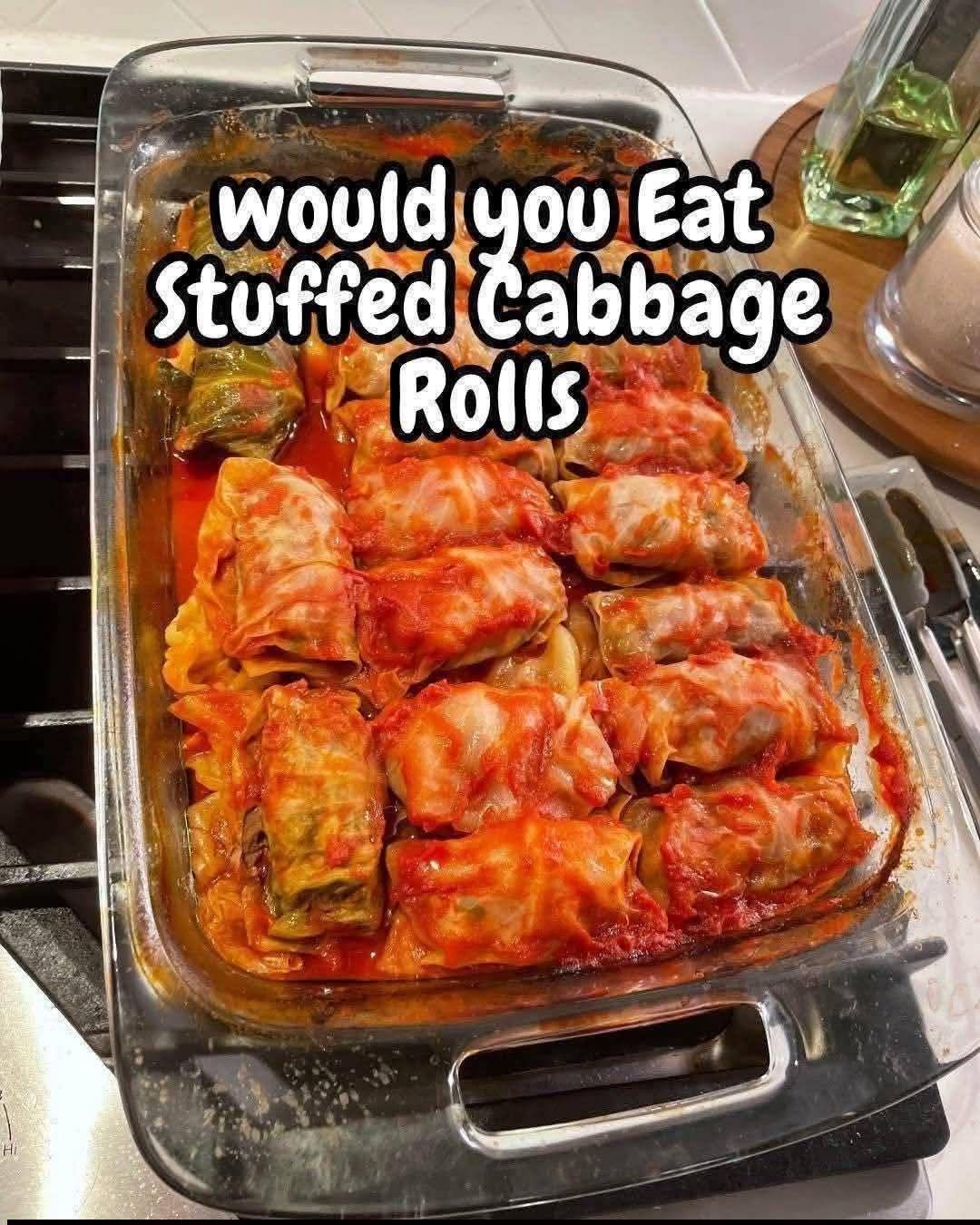
There is something wonderfully comforting about a big pan of old-fashioned stuffed cabbage rolls bubbling away in the oven. Tender cabbage leaves are wrapped around a savory filling of seasoned ground beef or pork, fluffy rice, onion, garlic, and paprika, then slowly baked in a rich tomato sauce until everything is tender and flavorful.
Stuffed cabbage is a beloved comfort food across Central and Eastern Europe, where it appears under many names, including Polish gołąbki, Ukrainian holubtsi, and Romanian sarmale. Recipes vary from family to family, but the basic idea remains beautifully simple: cabbage leaves wrapped around a hearty filling and gently cooked until tender.
🥬 Ingredients
For the cabbage rolls
- 1 large head green cabbage
- 1 lb ground beef, ground pork, or a 50/50 mixture
- 1 cup cooked white rice
- 1 small onion, finely chopped
- 2 cloves garlic, minced
- 1 large egg
- 1 tsp paprika
- 1 tsp salt
- ½ tsp black pepper
- ½ tsp dried thyme
- 2 tbsp chopped fresh parsley, optional
- 2 tbsp tomato sauce
For the tomato sauce
- 2 cups tomato sauce
- 1 can diced tomatoes, 14–15 oz
- 1 tbsp tomato paste
- 1 tbsp brown sugar, optional
- 1 tsp paprika
- ½ tsp garlic powder
- ½ tsp salt
- ¼ tsp black pepper
- ½ cup beef or chicken broth
- 1 tbsp Worcestershire sauce, optional
For serving
- Sour cream
- Fresh parsley
- Crusty bread or mashed potatoes, optional
👩🍳 Instructions
1. Prepare the cabbage
Fill a large pot with water and bring it to a boil.
Remove any damaged outer leaves from the cabbage. Carefully cut around the core with a sharp knife.
Place the whole cabbage into the boiling water, core-side down. After a few minutes, the outer leaves will begin to soften.
Using tongs, gently remove the softened leaves one at a time. Continue until you have around 12–16 good-sized leaves.
Set the leaves aside to cool.
Helpful tip
If the thick center rib of a cabbage leaf is difficult to roll, carefully shave down the thickest part with a knife. This makes the leaves much easier to fold without tearing.
2. Make the filling
In a large mixing bowl, combine:
- Ground beef and/or pork
- Cooked rice
- Chopped onion
- Garlic
- Egg
- Paprika
- Salt
- Black pepper
- Thyme
- Parsley
- 2 tablespoons tomato sauce
Mix gently with your hands or a wooden spoon until everything is evenly combined.
Don’t overmix. Keeping the mixture loose helps the finished cabbage rolls stay tender instead of becoming dense.
3. Make the sauce
In another bowl, combine the tomato sauce, diced tomatoes, tomato paste, broth, paprika, garlic powder, salt, pepper, and Worcestershire sauce.
If you enjoy a slightly sweet old-fashioned tomato sauce, add the brown sugar.
Stir well.
The sauce should taste rich, savory, and slightly tangy.
4. Form the cabbage rolls
Lay one cabbage leaf flat on your work surface.
Place approximately 2–3 tablespoons of filling near the bottom-center of the leaf.
Fold the bottom of the cabbage over the filling.
Fold both sides inward.
Then roll the cabbage upward into a neat little package.
Repeat with the remaining cabbage leaves and filling.
Don’t make the rolls too tight. The rice and meat need a little room as they cook.
5. Arrange the rolls
Spread a little tomato sauce over the bottom of a large baking dish.
Arrange the cabbage rolls seam-side down in the dish.
Pack them fairly close together so they don’t open during cooking.
Pour the remaining tomato sauce over the top, making sure the rolls are generously covered.
Cover the baking dish tightly with aluminum foil.
6. Bake slowly
Preheat your oven to 350°F (175°C).
Bake the covered cabbage rolls for approximately 1 hour and 30 minutes.
After about 1 hour, check them. The cabbage should be very tender and the filling should be cooked through.
For an especially tender, old-fashioned result, let them continue cooking gently until the cabbage practically melts into the sauce.
Remove the foil during the final 15–20 minutes if you want the tops to become slightly browned.
🍅 The Best Method for Tender Cabbage Rolls
The secret isn’t complicated:
soft cabbage + properly seasoned filling + plenty of sauce + slow cooking.
The cabbage gradually absorbs the tomato sauce while the meat releases its juices into the dish. The rice helps absorb those flavors, creating a filling that is moist, savory, and satisfying.
Stuffed cabbage has traditionally been a flexible dish, with different regions using beef, pork, rice, barley, buckwheat, potatoes, mushrooms, or other fillings.
❤️ A Little History
Stuffed cabbage rolls have a long and wonderfully diverse culinary history. Similar preparations appear throughout Central and Eastern Europe and beyond, with different names and ingredients depending on the region.
In Poland, they are commonly called gołąbki. In Ukraine they are known as holubtsi, while related versions include sarmale in Romania and sarma in parts of the Balkans.
Rice and meat became especially common in many modern versions. Earlier regional recipes could use grains such as buckwheat or barley, and some versions were completely meatless.
That’s part of what makes cabbage rolls so special: there isn’t just one “right” recipe. Families have been adapting them for generations according to what was available in their kitchens.
👵 The Old-Fashioned Family Method
For a truly nostalgic version, don’t rush the cooking.
Grandmother-style cabbage rolls are the kind of food that are assembled slowly, tucked tightly into a baking dish, covered generously with sauce, and left to simmer until the cabbage is incredibly tender.
The kitchen fills with the smell of tomato, garlic, onion, paprika, and slowly cooking meat.
And somehow, they often taste even better the next day.
⭐ Tips for Perfect Cabbage Rolls
Use a mixture of beef and pork:
The beef provides rich flavor while pork adds moisture and tenderness.
Don’t skip the egg:
It helps hold the filling together.
Don’t overstuff the leaves:
The filling expands as it cooks.
Use cooked rice:
This gives you more predictable results and keeps the filling tender.
Keep plenty of sauce in the pan:
The sauce helps prevent the cabbage from drying out.
Let them rest:
After removing the dish from the oven, allow the rolls to rest for about 10–15 minutes before serving.
🥔 What to Serve With Them
These cabbage rolls make a complete and hearty meal, but they are wonderful with:
- Creamy mashed potatoes
- Crusty homemade bread
- Buttered noodles
- Simple green salad
- Roasted carrots
- Steamed green beans
- Pickles or sauerkraut
- A spoonful of sour cream
For an especially comforting plate, spoon some of the tomato sauce over the cabbage rolls and add a generous scoop of mashed potatoes alongside.
❄️ Make-Ahead & Freezer Method
Cabbage rolls are excellent for preparing ahead.
You can assemble the rolls, place them in the baking dish with the sauce, cover tightly, and refrigerate them until you’re ready to bake.
They can also be frozen in an airtight container.
For leftovers, gently reheat them covered with a little extra tomato sauce so the cabbage stays moist.
And like many slow-cooked comfort foods, the flavors often become even more developed after a night in the refrigerator.
❤️ Final Thoughts
Old-fashioned stuffed cabbage rolls aren’t fancy food—and that’s exactly why they’re so wonderful.
They’re humble, hearty, inexpensive, filling, and deeply comforting. A simple head of cabbage becomes a beautiful family meal when wrapped around seasoned meat and rice and slowly cooked in tomato sauce.
Whether your family calls them gołąbki, holubtsi, cabbage rolls, or simply “Grandma’s cabbage,” they’re the kind of recipe that belongs at the center of the table.
Serve them steaming hot, spoon the rich tomato sauce over the top, add a little sour cream, and enjoy every tender bite.
One pan, simple ingredients, old-fashioned flavor—and the kind of dinner that makes everyone ask for seconds. ❤️
**Would you serve these classic stuffed cabbage rolls for Sunday dinner?**