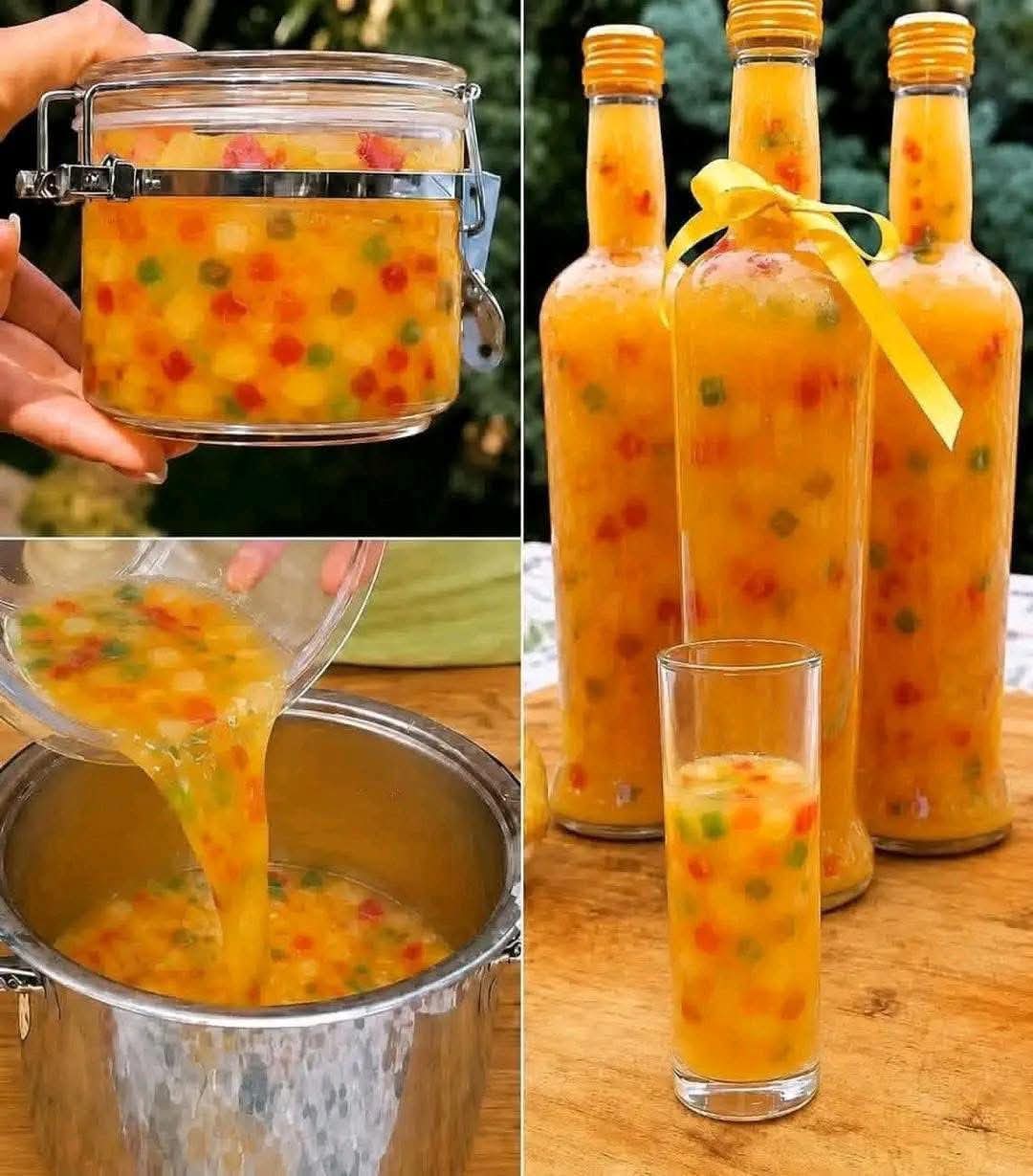
Homemade Tropical Mixed Fruit Nectar Drink
1. Introduction
Fruit-based beverages have always represented freshness, vitality, and natural sweetness. Among the most visually beautiful homemade beverages are tropical fruit nectar drinks, combining vibrant fruit flavors, colorful fruit pieces, refreshing texture, and naturally sweet juice.
This beautiful drink combines soft fruit cubes suspended inside a thick, smooth tropical nectar base, creating both a drink and a dessert-like experience.
Its bright golden-orange color, colorful fruit pearls, refreshing sweetness, and rich fruit aroma make it ideal for:
- Summer gatherings
- Family celebrations
- Café menus
- Party drinks
- Homemade bottled beverages
- Refreshing afternoon drinks
It is more than a simple beverage.
It is tropical freshness captured inside a bottle.
2. History of Fruit Nectar Drinks
Fruit beverages have existed for thousands of years.
Ancient civilizations discovered methods of crushing fruits and preserving juice naturally.
Ancient Egypt
People mixed fruit pulp with water and honey.
Ancient India
Mango and tropical fruit drinks were common in royal kitchens.
Southeast Asia
Fruit nectar drinks became popular because of abundant tropical fruits.
Latin America
Fresh fruit pulps were blended into sweet drinks sold in markets.
Modern Beverage Industry
Fruit concentrate technology allowed bottled fruit drinks to become global products.
Over time, homemade fruit drinks evolved into thick nectar beverages containing fruit chunks for extra texture and visual beauty.
Today fruit nectar drinks are among the world’s most loved refreshing beverages.
3. Ingredient Formation (Drink Structure)
This drink is built using five structural components.
Fruit Base
Fresh tropical fruits
Liquid Base
Water or fruit juice
Sweetener Base
Sugar or honey
Texture Component
Fruit cubes suspended in liquid
Preservation Component
Lemon juice or citric acid
Together these create:
- Sweetness
- Refreshment
- Texture contrast
- Bright aroma
- Thick nectar consistency
4. Complete Ingredients List
Fresh Fruits
- 2 cups mango cubes
- 2 cups pineapple cubes
- 1 cup peach cubes
- 1 cup papaya cubes
Colorful Fruit Pearls / Cubes
- Red jelly cubes or strawberry pieces
- Green kiwi cubes or jelly pearls
- Yellow mango cubes
Approximately:
- 2 cups mixed colorful fruit pieces
Liquid Base
- 1 liter fresh orange juice
- 2 cups water
Sweeteners
- 1 cup sugar
- or 6 tablespoons honey
Flavor Enhancers
- Juice of 2 lemons
- 1 teaspoon vanilla extract (optional)
Optional Preservation
- 1 teaspoon citric acid
5. Culinary Methods Used
This beverage combines multiple culinary methods.
Fruit Preparation
Cleaning and cutting fresh fruit.
Blending
Creating smooth fruit nectar.
Reduction
Cooking mixture to intensify flavor.
Cooling
Lowering temperature before bottling.
Bottling
Preserving drink safely.
Suspension Method
Keeping fruit pieces evenly distributed.
6. Step-by-Step Instructions
Step 1 — Wash Fresh Fruits
Wash thoroughly.
Remove dirt and impurities.
Dry carefully.
Only ripe fruits should be used.
Fresh fruit improves aroma.
Step 2 — Cut Fruit Pieces
Dice fruits into very small cubes.
Uniform size creates beautiful appearance.
Separate colorful fruit cubes.
Set aside.
Step 3 — Prepare Fruit Puree
Blend together:
- Mango
- Pineapple
- Papaya
- Peach
Blend until smooth.
Texture should become thick puree.
Step 4 — Prepare Liquid Base
In cooking pot combine:
- Fruit puree
- Orange juice
- Water
Mix thoroughly.
Step 5 — Add Sweetener
Add:
- Sugar or honey
Stir continuously.
Heat gently.
Do not boil aggressively.
Cook:
8–10 minutes
Step 6 — Add Lemon Juice
Add fresh lemon juice.
This balances sweetness.
Also improves preservation.
Stir carefully.
Step 7 — Add Fruit Pieces
Add colorful fruit cubes.
Mix gently.
Avoid breaking fruit pieces.
This creates suspended fruit texture.
Step 8 — Cooling Process
Remove from heat.
Allow cooling naturally.
Room temperature cooling is ideal.
Step 9 — Bottle Filling
Sterilize glass bottles.
Pour drink carefully.
Leave small air space at top.
Seal tightly.
Step 10 — Refrigeration
Refrigerate for:
6–8 hours
Serve cold.
Shake lightly before serving.
7. Professional Culinary Methods
Professional beverage makers focus on consistency.
Fruit Ripeness Selection
Sweet fruits reduce sugar needs.
Texture Preservation
Gentle mixing prevents fruit damage.
Acid Balance
Lemon juice balances flavor chemistry.
Suspension Technique
Thicker nectar helps fruit pieces stay visible.
Temperature Control
Excessive heat destroys fresh fruit aroma.
8. Formation (Presentation Style)
Presentation transforms the experience.
Bottle Presentation
Serve inside tall glass bottles.
Decorative ribbon around neck.
Elegant homemade appearance.
Glass Service
Pour into clear glass.
Allow colorful fruit pieces to remain visible.
Beautiful visual effect.
Party Style
Serve in ice bucket.
Cold bottles displayed on table.
Luxury Café Style
Tall chilled glass.
Fresh mint leaf garnish.
Fruit skewer decoration.
9. Flavor Profile
Flavor develops in layers.
First:
Bright tropical sweetness.
Second:
Fresh citrus acidity.
Third:
Rich mango and pineapple aroma.
Final:
Soft fruit chunks create juicy finish.
Texture:
- Thick nectar
- Smooth liquid
- Soft fruit cubes
- Refreshing cold sensation
10. Nutritional Value
Approximate serving.
Calories: 140 kcal
Vitamin C: Very high
Natural fruit sugars: High
Fiber: Moderate
Potassium: Good
Antioxidants: High
Hydration value: Excellent
Natural fruit enzymes improve digestion.
11. Lovers of Tropical Fruit Drinks
This drink is loved by many people.
Children
Bright colors and sweet flavor.
Summer Drink Lovers
Cold refreshing experience.
Fruit Lovers
Natural tropical flavor.
Café Customers
Beautiful premium presentation.
Party Hosts
Elegant bottled beverage.
Healthy Lifestyle Communities
Natural fruit nutrients.
Families
Safe homemade drink for gatherings.
Social Media Food Creators
Colorful visual appeal.
Perfect for photography and video content.
12. Serving Pairings
Perfect with:
- Ice cubes
- Fresh mint leaves
- Cheesecake
- Fruit salad
- Pancakes
- Pastries
- Croissants
- Summer desserts
- Vanilla ice cream
13. Culinary Science Behind the Drink
Fruit sugars dissolve naturally into liquid.
Natural pectin creates slight thickness.
Acid from lemon slows oxidation.
Cold temperature preserves aroma compounds.
Suspended fruit pieces create texture variation.
Vitamin compounds remain stable under gentle heat.
Color pigments from fruits create natural visual beauty.
Balance between acidity and sweetness defines final quality.
14. Conclusion
Homemade tropical fruit nectar drink transforms simple fresh fruit into a vibrant and luxurious beverage experience.
It combines:
- Freshness
- Natural sweetness
- Bright color
- Texture contrast
- Tropical aroma
- Nutrition
- Beauty
- Simplicity
Every bottle represents summer, freshness, and nature’s sweetness preserved beautifully.
It is more than a drink.
It is bottled tropical sunshine.
Refreshing.
Colorful.
Healthy.
Elegant.
Naturally beautiful.
Timeless.
Perfect for recipe books, café menus, food blogs, summer drink videos, beverage brands, and cinematic food content creation.