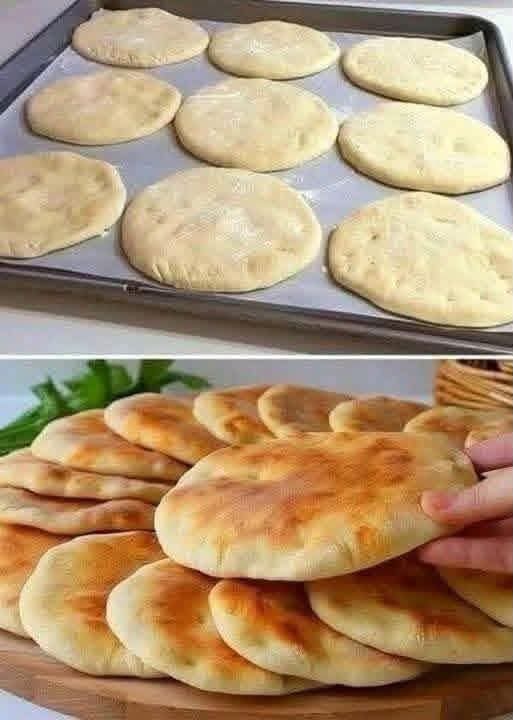

These homemade flatbreads are soft, fluffy, and lightly golden, just like the ones in your picture. They are made with a simple yeast dough, shaped into small round discs, and baked until they develop beautiful golden-brown spots while remaining tender inside.
They are perfect for breakfast, sandwiches, burgers, grilled meats, soups, or serving alongside Moroccan tagines. The dough is easy to prepare with everyday ingredients, and you can make several breads at once for the whole family.
Recipe Information
- Preparation time: 20 minutes
- Rising time: 1–1½ hours
- Cooking time: 15–20 minutes per batch, depending on method
- Total time: Approximately 2 hours
- Yield: 10–12 flatbreads
- Difficulty: Easy
- Cooking methods: Oven or stovetop
Ingredients

For the dough
- 500 g all-purpose flour or bread flour
- 300–330 ml lukewarm water
- 7 g instant yeast
- 1 tablespoon sugar
- 1 teaspoon salt
- 2 tablespoons olive oil or vegetable oil
- 2 tablespoons plain yogurt, optional, for extra softness
For finishing (optional)
- 2 tablespoons melted butter
- 1 tablespoon olive oil
- A little extra flour for shaping
Instructions and Cooking Method

Step 1: Activate the yeast
In a large mixing bowl, combine the lukewarm water, sugar, and instant yeast. Stir gently and leave for approximately 5 minutes.
The water should feel comfortably warm, not hot. If using active dry yeast, allow it to stand until foamy before continuing. Instant yeast can also be mixed directly with the flour.

Step 2: Mix the dough
Add the flour, salt, olive oil, and optional yogurt to the yeast mixture. Stir with a wooden spoon until the ingredients form a rough dough.
If the dough looks very dry, add a little more water, one tablespoon at a time. If it is extremely sticky, allow it to rest for 5 minutes before deciding whether it needs more flour.

Step 3: Knead until smooth
Transfer the dough to a lightly floured work surface. Knead for 8–10 minutes by hand, stretching and folding it until it becomes smooth and elastic.
The dough should be soft and slightly tacky, not stiff. A soft dough is one of the main secrets to making tender flatbreads rather than dry, hard ones.

Step 4: Let the dough rise
Place the dough in a lightly oiled bowl and turn it once so the surface is coated. Cover with a clean kitchen towel or plastic wrap.
Leave it in a warm place for approximately 60–90 minutes, or until it has doubled in size. Cooler kitchens may require additional time.

Step 5: Divide the dough
Gently press the risen dough to release some of the large air pockets. Divide it into 10–12 equal portions.
Shape each portion into a smooth ball by folding the edges underneath. Place the balls on a lightly floured tray, cover them, and let them rest for 10–15 minutes. This makes the dough easier to roll without shrinking back.

Step 6: Shape the flatbreads
Use a rolling pin or your hands to flatten each dough ball into a round disc approximately 12–15 cm wide and 1 cm thick.
Try to keep the thickness even so the breads cook uniformly. Place the discs on a lightly floured tray, leaving a little space between them.
Cover and let them rest for another 10–15 minutes while you prepare the oven or pan.

Step 7: Preheat the oven
If using an oven, preheat it to 220°C (425°F). Line a baking tray with parchment paper and arrange the flatbreads with space between them.
Bake for approximately 8–12 minutes, depending on their thickness and your oven. They should puff slightly and develop light golden patches. For deeper color, finish under the grill briefly, watching carefully to prevent burning.

Alternative Step 7: Cook on the stovetop
Heat a heavy skillet over medium heat. Place one flatbread in the dry pan and cook for approximately 2–3 minutes, until bubbles appear and the underside develops golden spots.
Flip and cook for another 1–3 minutes. Adjust the heat as needed to ensure the bread cooks through without burning. Repeat with the remaining discs.

Step 8: Keep the breads soft
Transfer the cooked flatbreads to a clean kitchen towel and cover them while you finish cooking the remaining batches.
For a richer flavor, brush the warm surfaces lightly with melted butter or olive oil. Stacking and covering the breads helps retain moisture and keeps the crust soft.
Secrets to Soft, Fluffy Flatbread
- Use lukewarm water: Very hot water can damage the yeast.
- Keep the dough soft: Too much flour makes the breads dense and dry.
- Allow enough rising time: The dough should expand noticeably before shaping.
- Rest after rolling: This helps the dough relax and cook more evenly.
- Avoid overcooking: Flatbreads can become hard if left in the oven or pan too long.
- Cover after cooking: A clean towel helps retain moisture and keeps the breads tender.
Serving Suggestions


These breads are delicious in many ways:
- For breakfast: Serve with butter, honey, jam, cheese, or olive oil.
- For sandwiches: Slice them horizontally or fold them around grilled chicken, tuna, eggs, or vegetables.
- With Moroccan meals: Serve alongside tagines, lentils, beans, or grilled meats.
- As a snack: Pair with hummus, garlic sauce, or a fresh tomato dip.
- For children: Make smaller rounds and serve with cheese or mild fillings.
Storage and Freezing
Let the flatbreads cool completely before storing them in an airtight bag or container. Keep them at room temperature for up to 2 days, or refrigerate them for approximately 3–4 days.
To reheat, warm them briefly in a covered skillet or wrap them in foil and place them in a low oven until soft.
For longer storage, freeze the cooled flatbreads with parchment paper between each one. Place them in a freezer-safe bag and freeze for up to 2–3 months for best quality. Thaw at room temperature or reheat directly from frozen until warm.
Variations to Try
Garlic flatbread: Mix finely minced garlic and chopped parsley into a little melted butter and brush it over the finished breads.
Herb flatbread: Add dried oregano, thyme, or chopped coriander to the dough.
Cheese flatbread: Sprinkle grated cheese over each disc during the final minutes of baking.
Whole-wheat flatbread: Replace up to half the white flour with whole-wheat flour. You may need slightly more water, and the breads will have a denser texture.
Stuffed flatbread: Add a small amount of cooked, cooled filling such as cheese and herbs, then seal the dough and flatten gently before cooking.
Conclusion
These homemade soft flatbreads are simple, versatile, and perfect for everyday meals. The yeast creates a light texture, while the soft dough and short cooking time help the breads remain tender inside with attractive golden patches outside.
With a little kneading, sufficient rising time, and careful cooking, you can prepare a batch that looks just like the flatbreads in your picture.
The most important tip: keep the dough soft, let it rise properly, and cover the breads with a clean towel immediately after cooking. This helps preserve their softness and makes them ideal for sandwiches, dipping, and serving with family meals. 🫓
9