Introduction
Fresh ginger water is a simple homemade drink prepared by gently simmering fresh ginger in water and serving it warm or chilled. It has a naturally spicy, warming flavor and can be enjoyed throughout the day as an alternative to sugary beverages.
Ginger has been used traditionally in many cultures as a flavorful ingredient and herbal preparation. Ginger water is often enjoyed for its comforting qualities, particularly after meals or during cold weather.
Although ginger water is sometimes promoted online as a drink that “melts” abdominal, neck, arm, back, or thigh fat, no drink can selectively remove fat from particular areas of the body. Likewise, ginger should not be considered a natural form of morphine or a cure for muscle, joint, or rheumatic pain. Ginger may have anti-inflammatory properties, but persistent or severe pain deserves proper medical evaluation.
Ingredients
- 2–3 inches (5–7.5 cm) fresh ginger root
- 4 cups (1 liter) water
- 1–2 teaspoons fresh lemon juice, optional
- 1 teaspoon honey, optional
- A few fresh mint leaves, optional
- Ice cubes, if serving cold
Instructions
Step 1: Prepare the Ginger
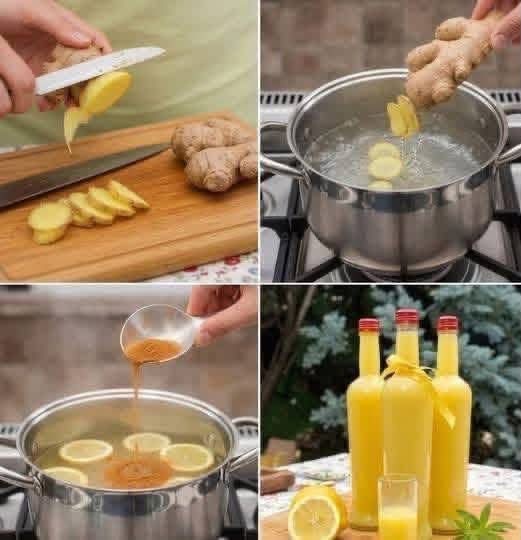
Wash the ginger root thoroughly. You may peel it with the edge of a teaspoon, although peeling is optional if it has been cleaned well.
Slice the ginger into thin pieces. Thin slices allow more of the ginger’s flavor to infuse into the water.
Step 2: Heat the Water
Pour 4 cups of water into a saucepan and bring it to a gentle boil.
Add the sliced ginger and reduce the heat to low.
Step 3: Simmer
Cover the saucepan loosely and allow the ginger to simmer for approximately 10–15 minutes.
For a stronger and spicier drink, you can simmer it a little longer. Avoid boiling it aggressively for a long time, as a gentle simmer is sufficient for making a flavorful infusion.
Step 4: Strain
Remove the saucepan from the heat and let the drink cool slightly.
Strain the ginger pieces from the water using a fine-mesh strainer.
Step 5: Add Flavor
For a refreshing version, add a squeeze of fresh lemon juice.
If you prefer some sweetness, add a small amount of honey once the drink has cooled somewhat.
Fresh mint can also be added for a cooling flavor.
Step 6: Serve
Serve the ginger water warm for a comforting drink, or refrigerate it and serve over ice for a refreshing beverage.
Method
The basic method is an infusion by gentle simmering. Heating the fresh ginger in water allows its characteristic flavor and aromatic compounds to move into the water.
For a stronger preparation, use more ginger or allow it to steep for several additional minutes after removing it from the heat.
For a milder drink, use less ginger and dilute the finished infusion with additional water.
Optional Lemon-Ginger Version
For a bright and refreshing variation, prepare the ginger water as described above. Once it has cooled slightly, stir in fresh lemon juice.
This version is especially pleasant when chilled and served with ice and a few mint leaves.
Optional Honey-Ginger Version
If you enjoy a sweeter drink, add approximately one teaspoon of honey to a warm—not extremely hot—cup of ginger water.
The honey is optional and adds sweetness rather than making the drink a special fat-burning remedy.
History
Ginger has a long culinary and traditional-use history in Asia and has been used for centuries in foods, beverages, and traditional preparations. Its distinctive spicy aroma comes from naturally occurring compounds in the ginger root.
Ginger eventually became popular around the world and is now used in everything from teas and infused drinks to savory dishes, baked goods, sauces, and desserts.
Ginger water is one of the simplest ways to enjoy the flavor of this familiar root without needing complicated ingredients.
Formation
The beauty of ginger water lies in its simplicity. Fresh ginger is sliced, gently heated with water, strained, and then served according to preference.
The resulting drink is lightly spicy, aromatic, and refreshing. Lemon, mint, or a small amount of honey can transform the basic infusion into several different variations.
Wellness Notes
Ginger is commonly consumed as part of a normal diet and has been studied for several possible health effects. However, claims that ginger water directly eliminates body fat from specific areas are not established.
Body fat reduction occurs through overall energy balance and is influenced by nutrition, physical activity, sleep, genetics, hormones, and other factors. There is no beverage that can specifically target fat from the abdomen, neck, arms, back, or thighs.
Similarly, ginger water should not replace medical treatment for arthritis, rheumatic conditions, significant muscle pain, or persistent joint pain.
Storage
Allow the ginger water to cool before transferring it to a covered container.
Refrigerate and use within a few days for the best flavor. If it develops an unusual smell, appearance, or taste, discard it.
Conclusion
Fresh ginger water is an inexpensive and easy homemade drink with a distinctive spicy flavor. It can be enjoyed warm in the morning, after a meal, or chilled throughout the day.
While it should not be considered a miracle fat-burning drink or a replacement for pain medication, it can be a pleasant way to include ginger in your everyday diet.
For Ginger Lovers
If you love ginger, try experimenting with different combinations. Add lemon for brightness, mint for freshness, or a small amount of honey for sweetness. You can also combine ginger with other culinary ingredients such as cinnamon or orange peel for a different flavor profile.
The key is to enjoy ginger water as a flavorful homemade beverage—not as a guaranteed treatment or quick solution for weight loss or pain.
Final Method
Slice → Simmer → Steep → Strain → Flavor → Serve.
That is all it takes to make a comforting homemade ginger drink that can be enjoyed either warm or cold.