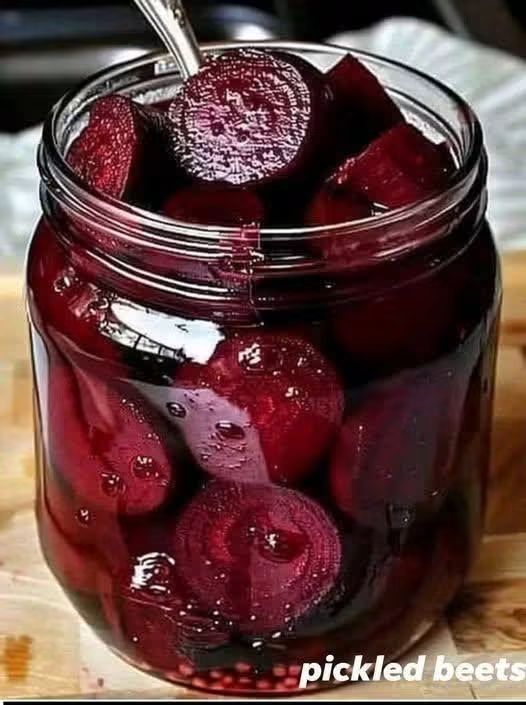
Absolutely! Pickled beets are one of those old-fashioned recipes that can turn a humble root vegetable into something sweet, tangy, aromatic, and wonderfully colorful. The combination of earthy beets, vinegar, warm spices, and a touch of sugar creates a delicious side dish that pairs beautifully with roasted meats, sandwiches, salads, and family dinners.
Introduction
If you grew up with homemade pickles on the table, you may remember a jar of ruby-red pickled beets sitting beside the other preserves. This recipe keeps that traditional spirit alive. Tender beets are sliced and covered with a fragrant vinegar mixture flavored with cloves and allspice.
After chilling, the beets become beautifully infused with the sweet-and-sour pickling liquid. They’re crisp-tender, juicy, aromatic, and packed with that unmistakable homemade flavor.
🛒 Ingredients
For the Beets
- 8 medium fresh beets
- Water, enough to cover the beets
For the Pickling Mixture
- 1 cup vinegar
- 1/2 cup granulated sugar
- 1 1/2 teaspoons whole cloves
- 1 1/2 teaspoons whole allspice
- 1/2 teaspoon salt
Optional Additions
For a slightly different flavor, you can also add:
- 1 small cinnamon stick
- 2–3 thin slices of fresh onion
- 1 bay leaf
- A few black peppercorns
👩🍳 Instructions
Step 1: Prepare the Beets
Begin by thoroughly scrubbing the beets under cool running water to remove any dirt.
Trim the tops, leaving about 1 inch of the stems attached. Keeping some of the stem helps reduce excessive color bleeding while the beets cook.
Place the beets in a large Dutch oven and add enough water to completely cover them.
Bring the water to a boil over medium-high heat.
Step 2: Cook Until Tender
Once boiling, reduce the heat and cover the pot.
Simmer the beets for approximately 25–30 minutes, or until they can be easily pierced with a fork.
The cooking time may vary depending on the size of your beets.
Remove the cooked beets from the water and allow them to cool enough to handle comfortably.
Step 3: Peel and Slice
Once cooled, gently rub or peel away the skins.
Trim away the remaining tops and roots.
Slice the beets into rounds or wedges, depending on how you like them served.
Place the sliced beets in a large bowl and set aside.
🍶 Make the Pickling Liquid
In a small saucepan, combine:
- Vinegar
- Sugar
- Whole cloves
- Whole allspice
- Salt
Stir everything together and bring the mixture to a boil.
Reduce slightly and continue boiling for about 5 minutes, allowing the spices to release their wonderful aroma.
Step 4: Combine
Carefully pour the hot pickling mixture over the sliced beets.
Gently stir so that every piece gets coated with the sweet, spiced vinegar.
Allow the mixture to cool slightly.
Step 5: Chill and Marinate
Cover the bowl and refrigerate for at least 1 hour.
For an even deeper flavor, let the beets marinate several hours or overnight. The longer they rest, the more the vinegar and spices penetrate the beets.
🌸 The Method Behind the Flavor
The secret to these pickled beets is the balance between sweet, sour, salty, and earthy flavors.
The vinegar provides the bright tang, while sugar softens its sharpness. Cloves contribute a warm, aromatic character, and allspice adds a gentle combination of spice and sweetness.
Meanwhile, the naturally earthy flavor of the beets gives the entire dish its rich foundation.
The refrigeration step is important because it allows the flavors to come together rather than tasting like separate ingredients.
📜 A Little History
Pickled beets belong to a long tradition of preserving seasonal vegetables. Before modern refrigeration and year-round grocery shopping, preserving vegetables with vinegar, salt, sugar, or fermentation was an important way to extend the life of the harvest.
Beets were particularly well suited to pickling because their natural sweetness worked beautifully with vinegar and spices.
Recipes like this became treasured additions to family tables, church suppers, holiday meals, potlucks, and traditional Sunday dinners. Many families developed their own versions—some sweeter, some more sour, and others heavily spiced.
That is part of the charm of old-fashioned pickled beets: there isn’t just one perfect version.
❤️ For Pickled Beet Lovers
If you’re already a pickled-beet lover, you know that these aren’t just a side dish.
They’re fantastic:
- Alongside roast beef
- With grilled chicken
- Served with sandwiches
- Chopped into salads
- Alongside cheese and crackers
- With potato or egg salad
- On a traditional dinner plate
- As part of a holiday spread
- Straight from the refrigerator as a tangy snack
Try serving them cold with a little of their pickling liquid spooned over the top.
🫙 Storage Note
Keep these refrigerated in a clean, covered container and use them within a reasonable refrigerated storage period. This recipe is a refrigerator-pickled beet recipe, not a shelf-stable canning recipe. For long-term pantry storage, use a tested water-bath canning recipe and follow its processing times and acidity requirements rather than simply storing this version at room temperature.
🌟 Serving Method
For the prettiest presentation, arrange the chilled beet slices on a serving platter and spoon a little of the pickling liquid over them.
Garnish with a few fresh herbs if desired.
The deep ruby color makes them especially beautiful on a dinner table, and the sweet-tangy flavor provides a wonderful contrast to rich and savory foods.
🥰 Conclusion
These old-fashioned pickled beets prove that simple ingredients can create something incredibly special. Fresh beets, vinegar, sugar, salt, cloves, and allspice come together to create a bright, flavorful side dish with plenty of nostalgic charm.
They’re easy enough for an everyday meal but special enough for a holiday table.
And if you’ve never tried homemade pickled beets before, this is a wonderful place to start.
So, be honest: Do you actually eat pickled beets? ❤️
Are you a longtime fan, or would you give these sweet-and-tangy beets a try?