Introduction
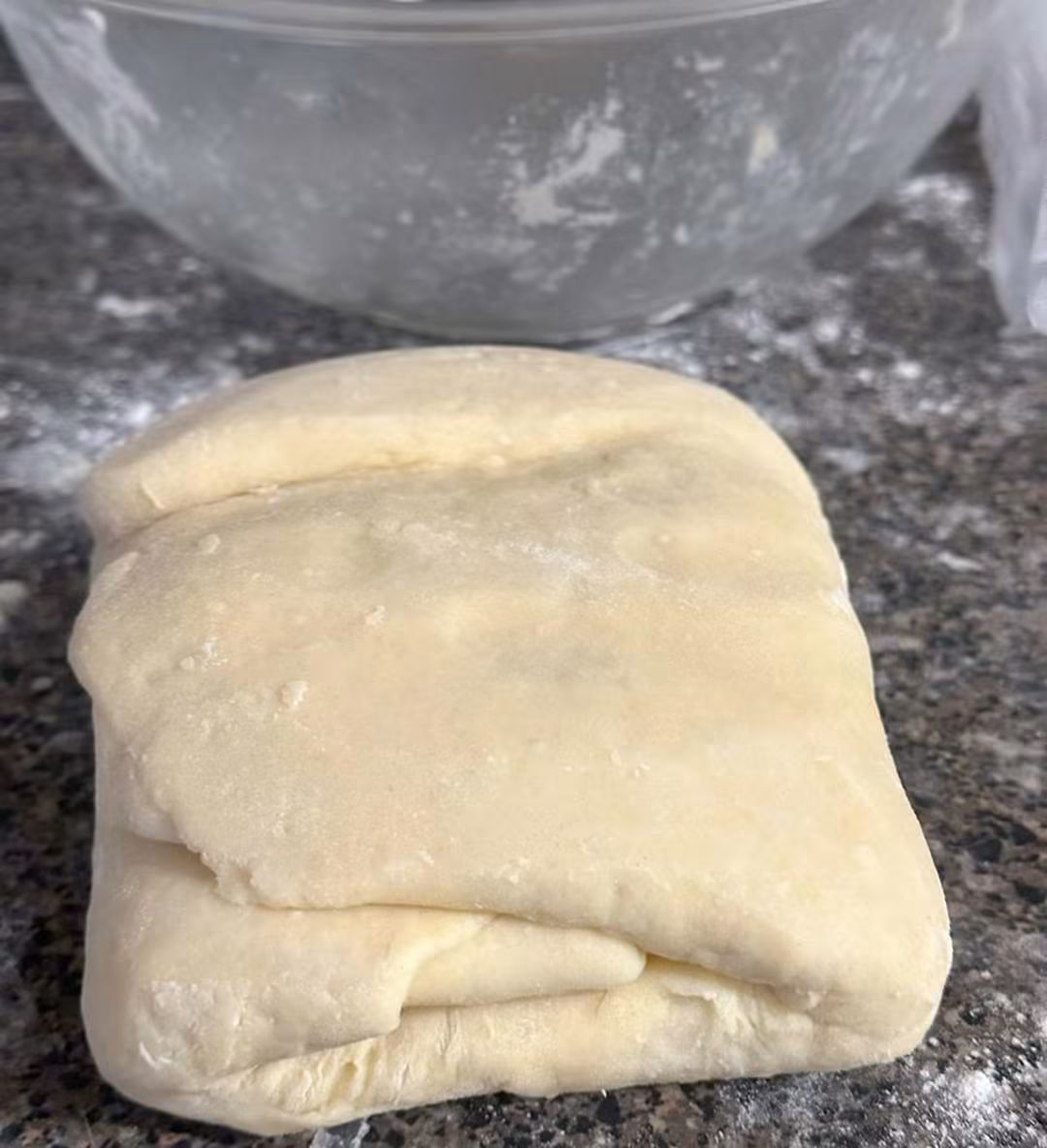
Homemade puff pastry is one of the most rewarding doughs to make from scratch. Although it has a reputation for being difficult, the process is much easier than many people think when you take your time. The secret lies in creating dozens of thin layers of butter and dough that puff beautifully in the oven, producing a light, flaky, and crispy texture. This versatile pastry can be used for sweet desserts like fruit pies, turnovers, and pastries, or savory dishes such as quiches, sausage rolls, and cheese-filled appetizers.
Ingredients
For the Dough
- 500 g (4 cups) all-purpose flour
- 10 g (2 teaspoons) salt
- 250 ml (1 cup) cold water
- 50 g (¼ cup) unsalted butter, melted
For the Butter Layer
- 300 g (1⅓ cups) cold unsalted butter
Optional
- 1 beaten egg for brushing before baking
Equipment
- Rolling pin
- Mixing bowl
- Plastic wrap
- Bench scraper
- Baking tray
- Pastry brush
Step-by-Step Instructions
Step 1: Prepare the Dough
- Mix the flour and salt together.
- Add the melted butter.
- Slowly pour in the cold water.
- Mix until a soft dough forms.
- Knead gently for about 5 minutes until smooth.
- Wrap the dough and refrigerate for 30 minutes.
Step 2: Prepare the Butter
- Place the cold butter between two sheets of parchment paper.
- Roll it into a square about 15 cm (6 inches).
- Chill until firm but flexible.
Step 3: Lock in the Butter
- Roll the dough into a square twice the size of the butter.
- Place the butter in the center.
- Fold the corners over the butter completely.
- Seal all the edges.
Step 4: First Fold
- Roll into a long rectangle.
- Fold one third toward the center.
- Fold the opposite third over it like a letter.
- Wrap and refrigerate for 30 minutes.
Step 5: Repeat
Repeat the rolling, folding, and chilling process 5–6 times. Each fold creates more delicate layers that will rise during baking.
Step 6: Final Chill
Refrigerate the finished dough for at least one hour before using.
Baking Instructions
- Preheat oven to 200°C (400°F).
- Roll dough to about 3–4 mm thick.
- Fill or shape as desired.
- Brush with egg wash if desired.
- Bake for 20–30 minutes, depending on the recipe, until golden brown and crisp.
Different Methods
Classic French Method
Many folds with resting periods create extremely fine, delicate layers.
Quick Rough Puff Method
Butter is mixed in chunks with the flour, reducing preparation time while still producing flaky pastry.
Food Processor Method
The dough is mixed quickly in a processor before folding by hand.
Overnight Method
Prepare the dough over two days for exceptional flavor and texture.
Tips for Perfect Puff Pastry
- Always keep the butter cold.
- Work quickly to prevent melting.
- Chill between every fold.
- Avoid adding too much flour while rolling.
- Bake in a fully preheated oven.
- Do not open the oven during the first half of baking.
- Use high-quality butter for the richest flavor.
Sweet Filling Ideas
- Apple and cinnamon
- Mixed berries
- Peach preserves
- Chocolate and hazelnut spread
- Lemon curd
- Vanilla pastry cream
- Sweet cream cheese
- Strawberry jam
Savory Filling Ideas
- Ham and cheese
- Spinach and feta
- Chicken and mushrooms
- Ground beef
- Sausage
- Caramelized onions
- Tomato and mozzarella
- Bacon and cheddar
History of Puff Pastry
Puff pastry has a fascinating culinary history that dates back several centuries. Early laminated dough techniques appeared in the Middle East before evolving throughout Europe. French bakers refined the folding process into the classic puff pastry known today, creating a dough capable of producing hundreds of delicate layers. It soon became a symbol of fine baking and remains one of the foundations of French pastry.
Formation of the Layers
The flaky texture forms because thin sheets of butter become trapped between layers of dough. During baking:
- The butter melts.
- Water inside the butter turns into steam.
- Steam pushes the dough layers apart.
- The flour structure sets.
- Hundreds of crisp, airy layers are created.
This natural steam expansion is what gives puff pastry its signature rise.
Why People Love Homemade Puff Pastry
Homemade puff pastry is loved because it offers:
- Rich buttery flavor.
- Exceptionally crisp layers.
- Endless sweet and savory possibilities.
- Better freshness than many store-bought versions.
- A satisfying baking experience.
- Impressive results for family gatherings and celebrations.
Serving Suggestions
Enjoy puff pastry as:
- Fruit pies
- Cheese pastries
- Breakfast turnovers
- Sausage rolls
- Mini appetizers
- Napoleons
- Cream horns
- Palmiers
- Chicken pot pies
- Dessert tarts
Storage
- Refrigerate for up to 3 days.
- Freeze for up to 3 months.
- Thaw overnight in the refrigerator before using.
- Baked pastries stay crisp in an airtight container for 2 days and can be reheated in the oven.
Conclusion
Homemade puff pastry is a timeless dough that transforms simple ingredients into elegant, flaky creations. While it requires patience during the folding process, the reward is a beautifully layered pastry that is far superior in flavor and texture to most commercial versions. Whether you’re preparing sweet desserts or savory meals, this versatile recipe is sure to become a favorite in your kitchen.
Happy baking!