HomemadeLemon Peel Liqueur (Limoncello Style)
Introduction
Bright, refreshing, and bursting with citrus flavor, homemade lemon liqueur is a traditional drink enjoyed in many Mediterranean countries. Made by infusing lemon peels in alcohol and blending the extract with a sweet syrup, this golden beverage develops a rich aroma and a smooth, sweet-tart taste.
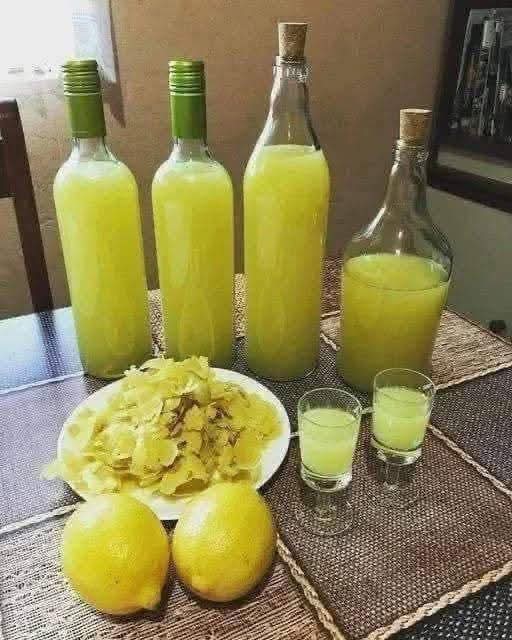
The image shows fresh lemons, peeled lemon zest, and bottles of a homemade lemon infusion, similar to the famous Italian Limoncello. It is often served ice-cold after meals as a digestif or used in cocktails and desserts.
History
Lemon liqueurs have been produced for generations in coastal regions where citrus fruits grow abundantly. The most famous version, Limoncello, originated in Southern Italy, particularly around the Amalfi Coast, Capri, and Sorrento.
Families traditionally prepared large batches using homegrown lemons and passed their recipes down through generations.
Today, homemade lemon liqueur remains a symbol of hospitality and celebration.
Ingredients
For the Infusion
- 10 large organic lemons
- 1 liter neutral alcohol (vodka or grain alcohol)
For the Syrup
- 4 cups water
- 3 cups granulated sugar
Equipment
- Vegetable peeler
- Large glass jar with lid
- Fine strainer
- Cheesecloth
- Funnel
- Glass bottles
Preparation Method
Step 1: Prepare the Lemons
Wash the lemons thoroughly.
Peel only the yellow outer layer, avoiding the white pith, which can make the drink bitter.
Place the peels in a large glass jar.
Step 2: Create the Infusion
Pour the alcohol over the lemon peels.
Seal tightly.
Store in a cool, dark place for 2 to 4 weeks.
Shake gently every few days.
Step 3: Prepare the Syrup
In a saucepan, combine water and sugar.
Heat until the sugar completely dissolves.
Allow the syrup to cool completely.
Step 4: Filter
Strain the lemon-infused alcohol through a fine sieve or cheesecloth.
Discard the peels.
Step 5: Blend
Mix the cooled syrup with the lemon infusion.
Taste and adjust sweetness if desired.
Step 6: Bottle
Pour into sterilized glass bottles.
Seal tightly.
Allow to rest for one additional week before serving.
Formation and Flavor Development
The yellow oils contained in lemon zest are responsible for the drink’s vibrant color and intense aroma.
During infusion:
- Alcohol extracts essential oils.
- Citrus compounds create fragrance.
- Sugar balances acidity.
- Aging smooths the flavors.
The result is a silky, aromatic drink with a fresh lemon finish.
Serving Suggestions
- Serve ice cold.
- Store in the freezer.
- Enjoy after dinner.
- Use in cocktails.
- Drizzle over ice cream.
- Add to cakes and pastries.
Tips for Success
Use Organic Lemons
Untreated lemons provide the best flavor and avoid unwanted waxes.
Avoid White Pith
Only the yellow zest should be used.
Be Patient
Longer infusion times generally produce deeper flavor.
Filter Carefully
Multiple filtrations create a smoother and clearer liqueur.
Why Citrus Lovers Enjoy It
People who love citrus flavors appreciate this recipe because:
- It highlights fresh lemon aroma.
- It is easy to make at home.
- The ingredients are simple.
- It can be customized for sweetness.
- It keeps for months when stored properly.
Storage
- Refrigerate after opening.
- For best flavor, store in the freezer.
- Properly sealed bottles can last many months.
Conclusion
Homemade lemon liqueur is a beautiful combination of simplicity and tradition. With fresh lemons, alcohol, sugar, and a little patience, you can create a vibrant golden drink that captures the essence of citrus. Whether enjoyed as a chilled after-dinner treat, shared with friends, or used in desserts, this homemade specialty offers a refreshing taste of Mediterranean craftsmanship. 🍋✨
Note: This recipe contains alcohol and should only be prepared and consumed where legal and appropriate for adults of legal drinking age.