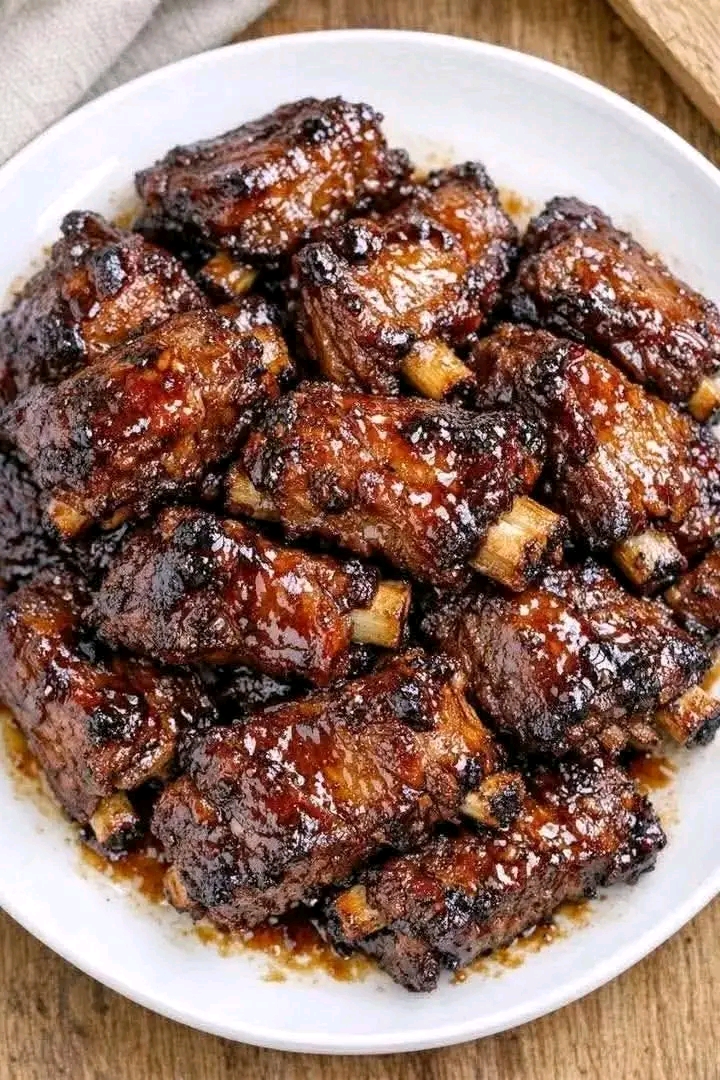
Fall-Off-the-Bone Farmhouse Pot Roast Stew
Introduction
“My neighbor who grew up on a farm taught me this old trick: drop four simple ingredients into a pot, let time do the work, and by evening the meat becomes so tender it practically falls off the bone into a rich, thick gravy.”
This old-fashioned farmhouse recipe is all about simplicity. Rural families often relied on slow cooking because it transformed inexpensive cuts of meat into hearty, comforting meals. The result is a stew-like pot roast with deep flavor, tender meat, and a thick, savory broth perfect for cold evenings and family gatherings.
Ingredients
Main Ingredients
- 2–3 kg beef chuck roast, beef shanks, or short ribs
- 2 large onions, sliced
- 4 carrots, cut into chunks
- 4 potatoes, cut into large pieces
- 4 cups beef broth
The “Four Things” Farm Trick
- 1 packet onion soup mix
- 1 can cream of mushroom soup
- 1 cup beef broth
- 2 tablespoons Worcestershire sauce
Seasonings
- 2 teaspoons salt
- 1 teaspoon black pepper
- 1 teaspoon garlic powder
- 1 teaspoon paprika
- 2 bay leaves
Optional Additions
- Celery
- Mushrooms
- Fresh thyme
- Fresh rosemary
Equipment
- Large Dutch oven or stockpot
- Slow cooker (optional)
- Wooden spoon
- Sharp knife
- Cutting board
Preparation Method
Step 1: Prepare the Meat
Pat the meat dry with paper towels.
Season generously with:
- Salt
- Pepper
- Garlic powder
- Paprika
Step 2: Brown the Meat
Heat a little oil in a large pot.
Brown the meat on all sides for 3–4 minutes per side.
This step creates a deep, rich flavor that makes the final stew taste amazing.
Step 3: Build the Base
Place onions, carrots, and potatoes in the bottom of the pot.
Lay the browned meat on top.
Step 4: Mix the Magic Four Ingredients
In a bowl combine:
- Onion soup mix
- Cream of mushroom soup
- Beef broth
- Worcestershire sauce
Mix until smooth.
Pour over the meat.
Step 5: Slow Cook
Cover tightly.
Cook:
- 7–8 hours on low or
- 4–5 hours on medium-low heat
Avoid opening the lid frequently.
The trapped steam helps break down connective tissue.
How the Meat Falls Off the Bone
The secret lies in collagen.
During long cooking:
- Collagen melts.
- Gelatin forms.
- The broth thickens naturally.
- The meat becomes fork-tender.
By evening, the meat practically separates from the bone with almost no effort.
Traditional Farmhouse Method
Many farming families prepared meals early in the morning before heading out to work.
The stew would simmer throughout the day while chores were completed.
When everyone returned home, dinner was ready:
- Tender meat
- Thick gravy
- Soft vegetables
- Rich aroma filling the house
History of Slow-Cooked Meat Dishes
Slow cooking dates back thousands of years.
Ancient communities discovered that tough cuts became delicious when cooked slowly over low heat.
Farm families especially favored:
- Beef shanks
- Chuck roasts
- Ox tail
- Short ribs
These inexpensive cuts transformed into luxurious meals through patience rather than expensive ingredients.
Alternative Methods
Slow Cooker Version
Place everything into a slow cooker.
Cook:
- Low: 8–10 hours
- High: 5–6 hours
Dutch Oven Version
Cook covered in the oven at:
- 150°C (300°F)
- 4–5 hours
Campfire Version
A cast-iron pot suspended over coals produces an authentic rustic flavor.
What Lovers of Comfort Food Enjoy Most
Fans of traditional comfort food love this recipe because:
- It requires little effort.
- The meat becomes incredibly tender.
- The gravy thickens naturally.
- The house smells wonderful all day.
- It feeds a crowd.
Many people say the leftovers taste even better the next day.
Serving Suggestions
Serve with:
- Crusty bread
- Mashed potatoes
- Buttered rice
- Fresh green beans
- Garden salad
For an authentic farmhouse meal, serve directly from the pot at the center of the table.
Conclusion
This old farmhouse pot roast proves that great cooking doesn’t need complicated techniques. With a few simple ingredients, low heat, and plenty of time, tough meat transforms into a rich, hearty meal that falls off the bone and melts in your mouth. It’s the kind of recipe passed from neighbor to neighbor and from generation to generation—a true comfort-food classic that never goes out of style.